


How to Enhance Beard Texture: From Coarse to Smooth and Well-Defined
Nov 18, 2025 | By Maria Eliza Pineda

If your beard feels more like steel wool than smooth facial hair, you’re not alone. Many men struggle with coarse, wiry, or rough beard strands that are hard to control, style, or keep soft. While genetics play a role in beard texture, the good news is that you can significantly improve how your beard feels and behaves with consistent care. Enhancing beard texture is not about trying to change your natural hair type but about improving softness, smoothness, manageability, and fiber alignment.
What Affects Beard Texture?
Genetic Baseline and Hair Diameter
Beard texture largely begins with genetics, which dictate your natural hair thickness, curl pattern, and density. Some men naturally grow thick, coiled, or flat beard hair depending on their genetic makeup. However, even though genetics influence your starting point, proper grooming practices can significantly enhance beard texture and softness over time.
Moisture Content and Dryness
One of the major reasons beards feel rough or wiry is a lack of hydration. When the beard hair is dry, it loses flexibility and absorbs less product, making it stiff and brittle. Increasing moisture levels through consistent hydration is essential for beard softness improvement.
Cuticle Condition and Raised Scales
Each hair strand has a cuticle layer made of protective scales that lie flat when healthy. When these cuticles are lifted or damaged, the beard feels coarse and frizzy. Proper conditioning and sealing of the cuticles can make beard texture smoother and more refined.
Damage, Split Ends, and Breakage
Mechanical stress, exposure to harsh elements, and rough grooming can lead to split ends. Damaged ends contribute to roughness and uneven beard texture, making the beard harder to train. Regular trimming helps retain healthy texture and remove the most damaged parts.
Buildup and Impurities
Residue from sweat, dirt, lotion, and beard products can accumulate on beard strands over time. Too much buildup makes the beard feel stiff, heavy, and less responsive to conditioning. A gentle beard cleanser is essential for maintaining a fresh, soft feel.
Mechanical Stress and Friction
Excessive rubbing, harsh towel drying, tight collars, and rough combing can weaken the beard’s structure. High friction raises the cuticle layer and increases frizz, contributing to an unmanageable texture. Reducing physical stress leads to gradual improvement in beard softness.
Diet, Hydration, and Health
Internal health plays a huge role in beard quality. When the body lacks nutrients or hydration, the hair becomes dull and rough. Drinking water and eating nutrient-rich foods helps improve beard hair texture from within.
Key Strategies to Enhance Beard Texture
Hydration and Conditioning
Hydration is the foundation of beard texture improvement. A high-quality beard oil like CopperGro Pro Beard Growth Oil helps moisturize the beard fibers deeply and create smooth slip. Consistent oiling reduces dryness and promotes softer beard hair texture. Complement it with a leave-in conditioner or deep conditioning treatment once a week for deeper nourishment.
Gentle Cleansing
A beard-specific cleanser removes buildup without stripping natural oils that contribute to softness. Avoid using harsh shampoos that contain sulfates, which can cause dryness. Wash your beard two to three times a week depending on your daily exposure to dirt or pollution to maintain a clean but moisturized texture.
Trimming Away Split Ends
Split ends create rough, frayed textures that ruin overall beard smoothness. Trimming your beard every few weeks eliminates damaged tips and helps maintain a clean, consistent feel. A well-shaped beard also appears softer and more controlled.
Using Proper Grooming Tools and Techniques
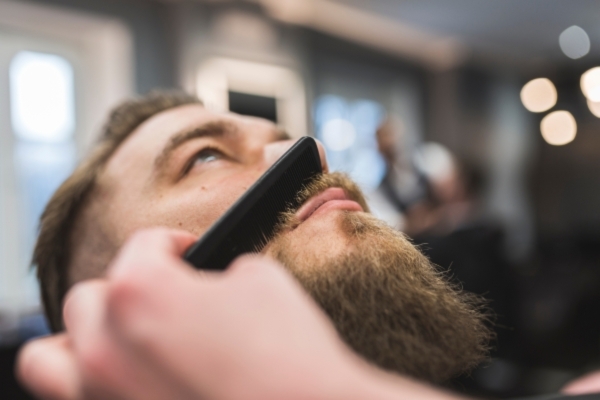
Wide-tooth combs help prevent pulling and tearing during detangling, especially for coarse or curly beards. Boar bristle brushes are ideal for distributing natural oils evenly, which enhances softness. Always start combing from the ends and work upward gently to avoid stress on hair strands. Training the beard daily in your preferred direction also improves its behavior and refined look.
Heat Styling with Care
Heat styling can help shape and soften beard texture if done correctly. Always apply beard oil first to act as a heat protectant before using blow dryers. Use low heat settings or cool air modes and brush downward to align strands smoothly. Avoid excessive heat as it may damage the beard cuticle and worsen roughness.
Protective Habits
Reducing friction and external stress plays a huge role in refining beard texture. Avoid aggressive towel rubbing and instead pat the beard dry gently after washing. Use satin or silk pillowcases to prevent nighttime friction that can roughen the beard. Wearing soft, non-abrasive fabrics around the neckline also helps protect the beard surface.
Supporting Beard Texture from Within
A soft, refined beard starts from healthy internal nourishment. Drink plenty of water daily to keep beard fibers hydrated. Eat a balanced diet rich in protein, omega-3 fatty acids, biotin, and vitamins A, C, E, and B complex. Getting enough sleep and reducing stress also helps improve hair quality over time.
Using the Mayraki CopperGro Pro Beard Growth Oil for Texture Enhancement

The Mayraki CopperGro Pro Beard Growth Oil is an excellent tool for enhancing beard texture because it hydrates and seals moisture inside the hair shaft. Apply a few drops to a slightly damp beard to maximize moisture retention and create softness. Massage the oil gently and then use a comb or brush to distribute it evenly across the beard. Apply before heat styling or grooming to reduce friction and improve beard slip. For extra texture refinement, layer the oil with a lightweight conditioner or styling balm for deeper conditioning.
Texture Styling Hacks and Tips
Light styling products can help add structure and enhance beard smoothness once texture is improved. A small amount of sea salt spray can be used if you want a controlled rugged or wavy texture. If you prefer a neat and defined beard finish, a light styling balm or wax helps maintain shape without stiffness. You can also train curls by using finger coiling or blow-drying while shaping the beard directionally. In humid environments, humidity-resistant products help maintain smoothness throughout the day.
Troubleshooting and Common Pitfalls
If your beard still feels rough after regular care, you might be experiencing product buildup that prevents proper absorption. Wash thoroughly with a cleanser and restart with a simpler routine. If your beard feels greasy, you may be applying too much oil or overlapping too many layers without cleansing. Over-brushing can damage strands and cause more frizz rather than softening. Using harsh combs, excessive heat, or chemical-laden products can worsen roughness. Neglecting hydration and diet can also prevent meaningful improvements in beard texture.
FAQs
Can beard texture change over time?
Yes, while natural hair type remains the same, consistent hydration, conditioning, and grooming can significantly improve softness and manageability.
Will trimming reduce roughness permanently?
Trimming removes split ends and dry areas, leading to an instantly softer feel, especially when combined with conditioning routines.
How often should I deep condition?
Once a week is ideal for deep conditioning, especially if your beard is coarse or exposed to external stress.
Can I use regular hair products on my beard?
Some hair products are too harsh for facial hair and skin, so it is best to stick to beard-specific conditioners and oils.
Is heat styling bad for beard texture?
Heat styling is safe when done at low temperatures with protective oil applied beforehand, but overuse can cause dryness and damage.
Well-Groomed and Smooth
Enhancing beard texture is a gradual process that requires consistent hydration, careful grooming, damage control, and healthy lifestyle habits. By combining proper cleansing, trimming, conditioning, protective practices, and nutrition, your beard can transition from rough and unmanageable to smooth and well-defined. The Mayraki CopperGro Pro Beard Growth Oil can be a key product in your daily routine to help hydrate, smooth, and refine your beard texture over time. Begin applying these steps consistently for a few weeks and observe the transformation in your beard’s feel and behavior.